Africa’s Tech Revolution: The Impact of AI, Cloud Computing, and Digital Innovation on the Continent’s Future


– Writes Lanem Law Kuma, contributing writer
The New Digital Execution
In Nairobi’s bustling tech hubs, Lagos’s expanding data centers, and Kigali’s smart city initiatives, a subtle revolution is underway. African enterprises have advanced from merely experimenting with digital solutions to adopting a strategic approach where technology aims to generate tangible value instead of being used arbitrarily. This shift in mindset is transforming the continent’s economic landscape, with cloud computing, artificial intelligence (AI), and cybersecurity emerging as the primary technologies fueling this transition.
According to the CIO100 Megatrends 2025 Report, these technologies have become standard in Africa’s business environment, with cloud computing leading at 61%, AI at 55%, and cybersecurity at 44% among organizations. This isn’t about following global trends but about creating solutions suited to African circumstances. As Harry Hare, Chairman of CIO Africa by dx⁵, notes: “African business leaders are no longer asking what’s new—they’re asking what works.“
The economic potential is substantial. Recent research suggests AI could contribute $2.9 trillion to Africa’s economy by 2030, with generative AI potentially adding up to $103 billion annually across various industries. These numbers reflect a broader narrative of Africa transforming from merely adopting global innovations to becoming a creator of local technological solutions that address its specific challenges.
The AI Revolution: Transitioning from Pilot Projects to a Major Economic Force
The Data Supporting the Transformation
Artificial intelligence has progressed from isolated pilot projects to become a vital business enabler across Africa, with over 55% of African companies now actively deploying AI solutions. This widespread adoption signifies a fundamental change in how organizations view technology—from a luxury to an essential tool.
The economic potential is significant. If African companies secure only 10% of the global AI market, the continent’s economy could expand by an extra $1.5 trillion—roughly half of its current GDP. McKinsey & Company estimates that generative AI could add between $61 billion and $103 billion annually to Africa’s economy, and the combined impact of both traditional and generative AI might exceed twice that figure.
Sectoral Impact and Real-World Applications
Across the continent, AI is delivering tangible value by solving persistent challenges:
Banking: African banks are utilizing AI to tailor outbound sales campaigns and automate credit memo creation. A sub-Saharan bank uses large language model agents to simulate customer interactions with copywriters, producing optimized marketing content that meets compliance standards. The economic potential for these banks is significant, estimated between $4.7 billion and $7.9 billion.
Retail: Both grocery and apparel retailers are now using AI-driven conversational bots that serve as personal shopping assistants. These smart systems have enhanced important online shopping metrics by over 50%, greatly decreasing the number of screens and clicks needed to reach checkout, and potentially boosting basket sizes.
Healthcare and Education: AI is tackling key social issues, from Kenya’s AI-triaged telemedicine to personalized student learning pathways. Additionally, AI-powered translation services for underrepresented languages such as Amharic enhance cross-cultural communication and broaden access to information.
Cloud Computing: The Foundation of Digital Transformation
The Infrastructure Revolution
Cloud computing has become the dominant mode of technology adoption in Africa, with 61.2% of organizations in Sub-Saharan Africa now using cloud services. This marks a major change in how businesses manage their digital infrastructure — moving from owning and maintaining physical servers to adopting scalable, cost-efficient cloud solutions.
The global landscape reveals both advances and obstacles. In 2024, the worldwide cloud computing sector earned $752.4 billion, whereas Africa’s total AI investment—primarily linked to cloud infrastructure—stands at only $2-3 billion, making up about 1-1.5% of global AI expenditure. This gap highlights the infrastructure shortfall and presents significant growth potential.
Closing the Cloud Divide
Despite quick adoption, major challenges persist in Africa’s cloud infrastructure.
Computing Capacity: African countries make up only about 1% of the world’s AI computing capacity, leading to a heavy reliance on foreign cloud resources.
Connectivity Barriers: Most African users still depend on 2G/3G networks, which cannot support advanced cloud-based services like AI diagnostics or remote learning.
Data Centre Limitations: The continent hosts less than 1% of global data centre capacity despite being home to nearly 19% of the world’s population.
However, significant investments are being made to close this gap. Nigeria is expected to reach a $671 million data centre market by 2030, while Côte d’Ivoire is investing $113 million in a national data centre. Infrastructure development is quickly progressing. Additionally, major hyperscalers are increasing their presence across Africa.
AWS has established a CloudFront edge node in Lagos and continues building Local Zones across South Africa
Microsoft runs Azure data centers in Johannesburg and Cape Town and is investing $1 billion in a geothermal-powered Azure East Africa Cloud Region in Kenya
Google has launched its first African cloud region in Johannesburg
The 2Africa subsea cable project aims to triple Africa’s international internet capacity by connecting 33 countries via 46 landing stations. This will significantly lower latency and bandwidth costs, playing a vital role in supporting the continent’s upcoming digital innovations.
Cybersecurity:
The Trust Imperative
From Compliance to Competitive Advantage
As digital adoption accelerates across Africa, cybersecurity has undergone a profound transformation—evolving from a compliance requirement to a strategic business differentiator. The CIO100 Megatrends 2025 Report reveals that 44% of organizations are now implementing advanced cybersecurity frameworks, reflecting a fundamental shift in how digital risk is perceived and managed.
This transition positions cybersecurity not as a technical necessity but as a foundation for trust in the digital economy. Nearly half of all participating organizations recognize that robust cybersecurity frameworks protect both data integrity and business continuity, enabling greater confidence in digital transformation initiatives.

Regional Responses to Evolving Threats
Across the continent, nations are developing sophisticated approaches to cybersecurity:
South Africa has bolstered its cybersecurity framework through the National Cybersecurity Policy Framework (NCPF) to combat increasing threats such as ransomware.
Ghana’s National Cyber Security Centre coordinates efforts to safeguard government data and critical infrastructure from cyber-threats.
At the corporate level, African businesses are increasingly adopting multi-cloud environments that allow them to balance costs while ensuring continuity and scalability, with advanced security protocols integrated across platforms.
Nigeria has put in place policies and legal instruments that provide structure and authority for combating cyber threats, like the Cybercrimes (Prohibition, Prevention, etc.) Act 2015; National Cybersecurity Policy and Strategy (NCPS 2021); and has established specialized institutions and response teams to detect, prevent, and respond to cyber threats. Nigeria increasingly uses sophisticated tools and systems to strengthen cybersecurity:
Despite this progress, challenges persist. Public-sector agencies face evolving threat environments, including increasingly sophisticated ransomware and state-sponsored attacks. Many are also constrained by limited budgets, which restrict their capacity to invest in advanced cybersecurity tools or hire expert professionals—underscoring the persistent talent shortage in this critical area.
IoT and Sustainability: Creating Smarter Futures
Precision for People and Planet
The Internet of Things (IoT) is emerging as a transformative force in Africa, especially in advancing sustainability objectives. Although its adoption lags behind cloud computing and AI, IoT’s influence is clearly seen in sectors such as agriculture, logistics, and healthcare. The African IoT market is expected to expand notably, potentially hitting around $30 billion by 2025.
What makes IoT particularly powerful in the African context is its ability to bring intelligence closer to where data is generated, helping address the continent’s long-standing connectivity challenges and enabling smarter operations even in remote areas. This deployment pattern is especially evident in several key sectors:
Agricultural Transformation
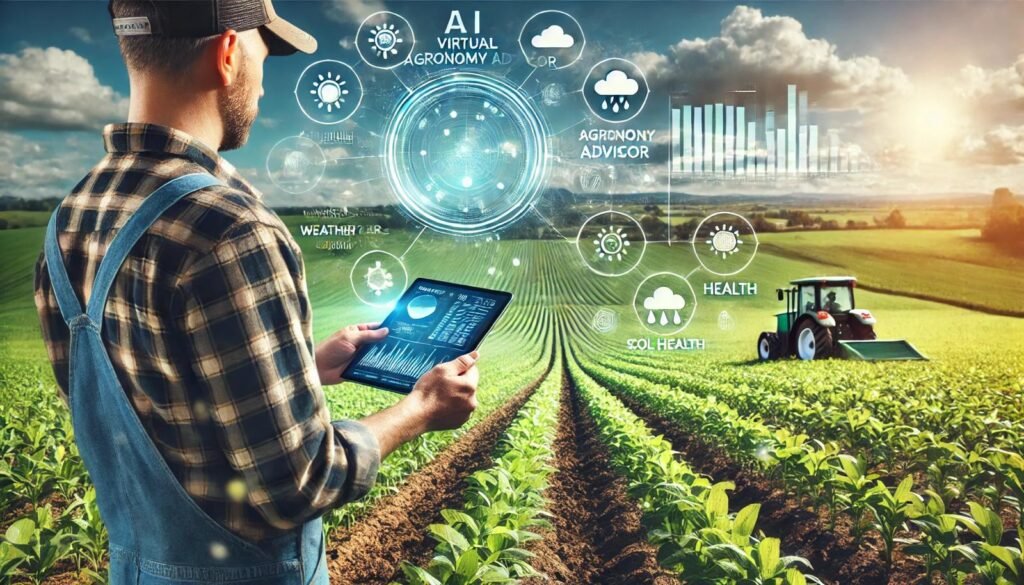
In agriculture, IoT sensors are enabling precision farming practices that optimize resource use and improve crop yields. Startups like Aerobotics use AI-powered IoT solutions to provide farmers with actionable insights on crop health and resource management. Between harvest cycles, farmers can leverage IoT sensors to monitor soil moisture levels, enabling precise irrigation and reducing water consumption. Similar technologies are being applied to livestock management, with IoT devices tracking animal health and location to enhance productivity and reduce losses.
Smart Cities and Resource Management
African cities are increasingly embracing IoT to address urban challenges:
Kigali, Rwanda has implemented energy-efficient streetlights equipped with sensors and IoT-enabled traffic systems to monitor congestion and optimize traffic flow.
Johannesburg, South Africa deploys IoT sensors in waste bins to optimize collection routes and reduce operational costs, while also implementing smart surveillance systems to improve public safety.
Lagos, Nigeria’s Eko Atlantic development incorporates IoT for waste management, energy efficiency, and flood control, integrating smart grids and metering for efficient energy and water use.
These applications demonstrate how IoT is becoming instrumental in building smarter, more sustainable urban environments across the continent. In the energy sector, IoT technology enables smart grids that monitor and manage consumption, optimize distribution, and integrate renewable sources. Smart meters allow consumers to track and control energy usage in real-time, contributing to more efficient resource utilization.
The Road Ahead: Challenges and Opportunities
Navigating the Implementation Gap
Despite the remarkable progress, Africa’s digital transformation faces significant headwinds. The continent accounts for just 1% of global AI computing capacity, highlighting a substantial infrastructure deficit that could hinder future innovation. This computing gap is compounded by connectivity challenges, with billions of Africans either offline or under-connected due to cost, device access, or computer literacy limitations.
The talent shortage represents another critical challenge. As organizations race to adopt advanced technologies, they face a shortage of skilled professionals who can develop, implement, and manage these complex systems. This skills gap affects AI implementation, cloud optimization, cybersecurity defense, and IoT deployment alike.
Other persistent barriers include:
Electricity Challenges: Frequent power outages disrupt data centre operations and reduce cloud reliability
Regulatory Hurdles: Complex and sometimes conflicting digital laws across borders can slow innovation and complicate cross-border e-commerce
Funding Disparities: Despite progress, Africa’s entire AI investment represents just 1-1.5% of global AI spending
Collaboration as the Path Forward
The solution to these challenges lies in collaborative action. As the CIO100 Megatrends Report notes, business leaders are calling for closer collaboration between policymakers, investors, and educators to sustain digital growth and build a stronger innovation ecosystem. This collaborative approach is already yielding results in several areas:
Policy Evolution: 39 of 55 African nations have now established data protection laws, with 34 creating regulatory authorities to oversee their implementation
Infrastructure Investments: Organizations like the IFC are making substantial bets, such as a $100 million investment in Raxio Group to expand Tier-III, carrier-neutral data centres in underserved African markets like Ethiopia, Tanzania, and Angola
Talent Development: Kenya, Nigeria, and Egypt are building strong AI talent pools, though these need to be paired with accessible cloud platforms to train and deploy AI solutions effectively
Kate Kallot, founder and CEO of Amini and former Nvidia executive, envisions an even more transformative future: “Within the next five to 10 years, we’re going to see African intelligence being exported to other countries across the Global South”. This perspective captures the ultimate potential of Africa’s tech transformation—evolving from technology consumer to innovation exporter.
A Continent Forging Its Own Path
Africa’s technology landscape in 2025 tells a story of pragmatic transformation. The trends of AI, cloud computing, cybersecurity, and IoT for sustainability represent more than technological adoption—they signal a fundamental shift in how the continent approaches development and innovation.
The most successful implementations share a common thread: they are authentically African solutions to African challenges. As Harry Hare notes, “Africa’s digital leaders are creating solutions that fit our realities, from internet costs to local data needs, and that’s what makes our innovation truly African”.
This tailored approach, combined with the continent’s demographic advantages—a young, connected, and entrepreneurial population—positions Africa uniquely in the global technology landscape. As Boris Kodjoe, cofounder of Full Circle Africa, observes: “Africa is the only region where population is getting younger, more connected, and more entrepreneurial all at the same time. I think the world is no longer asking ‘why Africa,’ but ‘when can we get in?’ And I think the time is now”.
The projected $2.9 trillion opportunity in AI and emerging technologies by 2030 may be ambitious, but the direction is clear. Across sectors and nations, African businesses and governments are moving from experimentation to execution, from technology adoption to value creation. They are building not just a digital future, but a digitally-enabled African future—one that honors local realities while embracing global possibilities.